The reassurance by PM Modi has come as an important moment of stability for India.
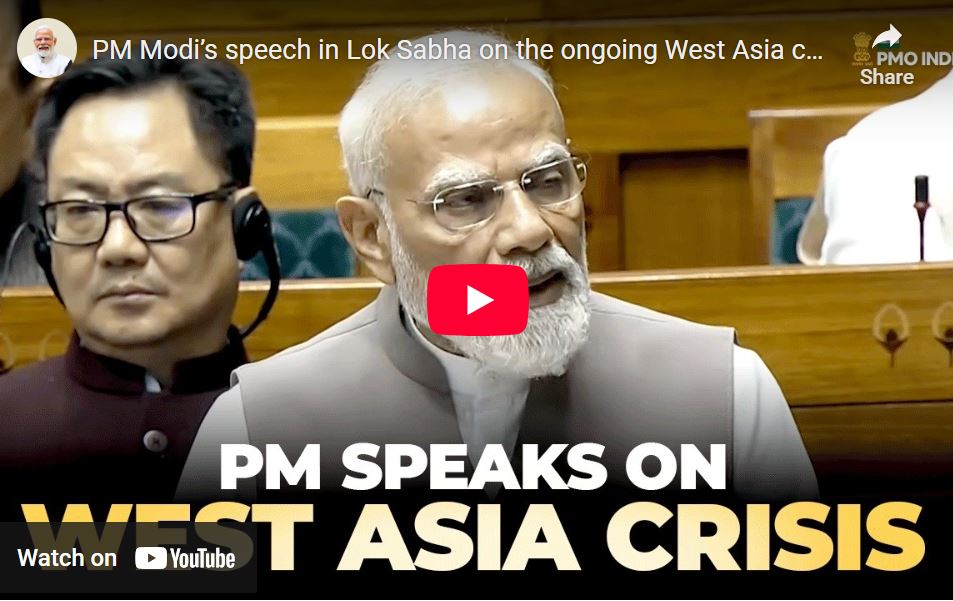
At a time when global tensions are rising around the Strait of Hormuz, the reassurance given by Prime Minister Narendra Modi has come as an important moment of stability for India. His address in Parliament was not just a routine statement, but a signal that the government is alert, prepared, and thinking ahead. In a crisis that combines economic, security, and humanitarian concerns, such clarity is essential.
The situation in West Asia is serious. With threats affecting global oil routes and a sharp fall in production, energy prices have already begun to rise. For a country like India, which depends heavily on imported oil, this creates immediate risks. Higher fuel prices can increase inflation, raise transport costs, and affect almost every sector of the economy. In this context, the Prime Minister’s assurance that supply chains are being managed and disruptions will be minimised, provides much-needed confidence to citizens and industries alike.
However, reassurance alone is not enough. What stands out is the government’s multi-level preparedness. The convening of the Cabinet Committee on Security and coordination across ministries shows that the crisis is being handled with seriousness. Efforts to diversify oil sources, maintain strategic reserves, and ensure smooth supply of petrol, diesel, and gas reflect planning that goes beyond short-term reactions. These steps are crucial in preventing panic and maintaining economic stability.
Another important aspect of the Prime Minister’s statement is the focus on Indians living abroad. Millions of Indians work in Gulf countries, and their safety is a major concern. Their livelihoods are also tied to India’s economy through remittances. By ensuring assistance, setting up helplines, and maintaining constant communication, the government has shown that it is not only protecting national interests but also individual citizens.
At the same time, the Prime Minister has rightly emphasised the importance of diplomacy. India’s position as a country that supports dialogue and peace strengthens its global image. In a conflict where many nations are directly or indirectly involved, maintaining balanced relations is both wise and necessary. This approach can help India secure energy supplies while also contributing to efforts for de-escalation.
Looking at the long-term impact, this crisis serves as a reminder that India cannot depend too heavily on a few regions for critical resources. Energy diversification, investment in renewable sources, and expansion of domestic production are are essential. The progress made in ethanol blending, solar energy, and electric mobility shows that India is moving in the right direction, but the current crisis highlights the need to accelerate these efforts.
Meanwhile, rising costs for industries, pressure on the rupee, and possible job losses are real risks. This makes it important for the government to closely monitor sectors like manufacturing and agriculture. Support for farmers, control over fertiliser prices, and strict action against black marketing will be key in protecting ordinary citizens.
In conclusion, the Prime Minister’s assurance has helped calm immediate fears, but it also carries a deeper message: India must remain prepared for a world that is increasingly uncertain. The real test will be in how effectively the country turns this crisis into an opportunity to strengthen its economy, secure its energy future, and protect its people.