(pmindia.gov.in)
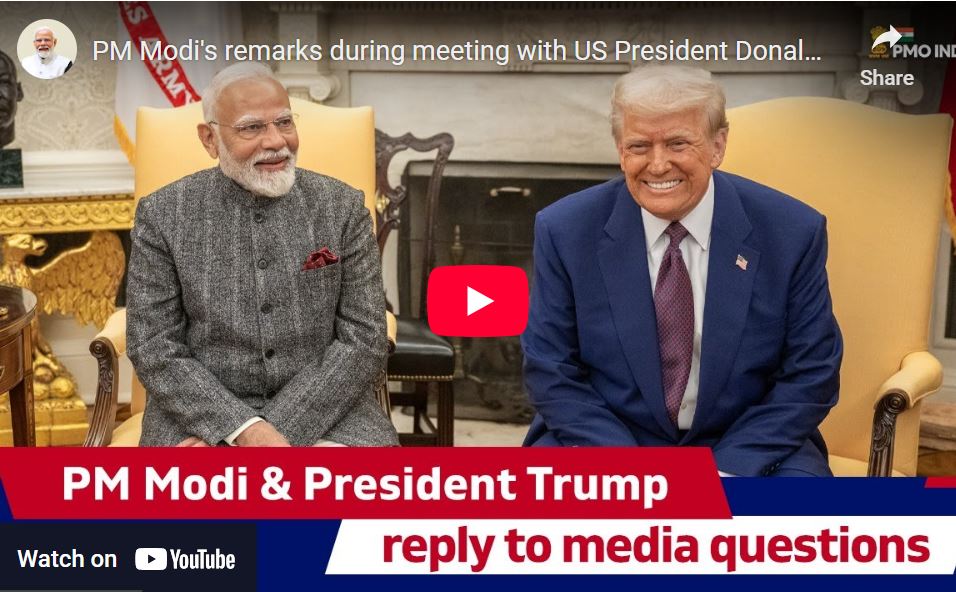
IMEC has once again come into focus after Prime Minister Narendra Modi’s recent visit to Israel.
The India-Middle East-Europe Economic Corridor, known as IMEC, has once again come into focus after Prime Minister Narendra Modi’s recent visit to Israel. During his talks with Israeli Prime Minister Benjamin Netanyahu, the corridor was reportedly discussed in detail. Now there is also an expanded IMEC on the table called “IMEC Plus”, which aims to expand the original plan and give it a wider role in global trade.
IMEC was first announced on the sidelines of the G20 Summit in New Delhi in 2023. Leaders from India, the European Union, France, Germany, Italy, Saudi Arabia, the UAE and the United States agreed to work together to build a new economic corridor. The plan includes two main routes. One will connect India to the Gulf region, and the other will link the Gulf to Europe. The goal is to improve connectivity, make trade smoother, reduce transport time and cost, and strengthen supply chains between Asia, the Middle East and Europe. For Europe, it may also serve as an alternative to China’s Belt and Road Initiative.
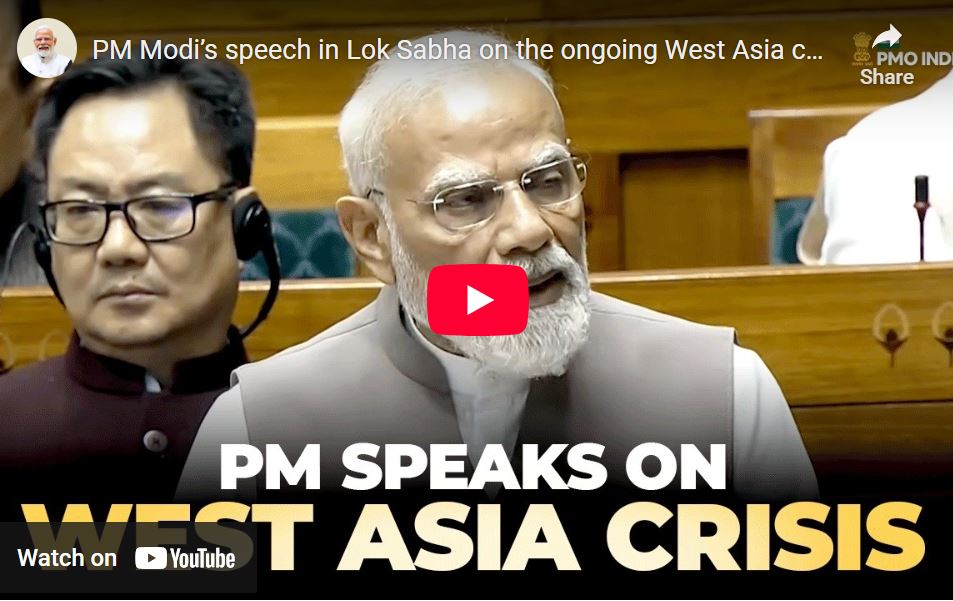
India’s Foreign Secretary Vikram Misri has confirmed that IMEC remains a priority. However, he also pointed out that the regional situation affects the pace of progress. For such a large project to succeed, stability and cooperation among participating countries are essential. Prime Minister Modi made it clear that peace and stability in West Asia are closely linked to India’s own security. He said that India supports dialogue and peaceful solutions in the region.
At the same time, there is fresh momentum behind expanding the project. Reports suggest that a broader version called “IMEC Plus” is being discussed. Under this idea, Egypt would act as a key hub, and several African countries can join as partners. The corridor would not only move goods between India, the Middle East and Europe, but also strengthen energy links and digital connectivity. It cocanuld also help connect Africa’s mineral resources, including rare earth materials, to larger global markets.
The concept of IMEC Plus was also highlighted at the Future Economic Cooperation Council meeting in Mumbai earlier in February. Speakers there described it as a shift from a simple trade route to a larger economic platform. Instead of seeing regions only as markets for finished goods, the new model looks at each region’s strengths. Egypt can serve as a gateway to Africa. Gulf countries bring energy resources, ports and industrial zones. India contributes technology, skills and innovation. Africa can become not just a buyer but also a supplier in the value chain. The idea is to create shared growth rather than one-sided trade.
At a conclave in 2025, World Bank’s Country Director in India, Auguste Tano Kouame, said IMEC can become a major boost for trade with Europe if it is supported by proper planning and investment. He had reportedly said, "Lowering logistics costs is essential for trade to thrive. And that’s where IMEC emerges as a game-changer."
Another important issue is governance. Large infrastructure projects often face delays due to regulatory differences and political changes. Experts have suggested the need for strong coordination and possibly an independent body to manage implementation. Harmonising customs procedures, rail systems, and digital documentation across countries will be necessary to avoid bottlenecks.
For Europe, IMEC offers an additional trade route at a time when global supply chains are under stress. For India, it is a strategic opportunity to deepen ties with West Asia and Europe while expanding its global footprint. For Africa, the expanded version can mean greater integration into global production networks.
IMEC and IMEC Plus are still evolving ideas, and much will depend on political stability and practical execution. But the message is clear. India is positioning itself at the centre of a new economic bridge linking continents. If managed carefully, this corridor can shape trade, cooperation and regional partnerships for years to come.