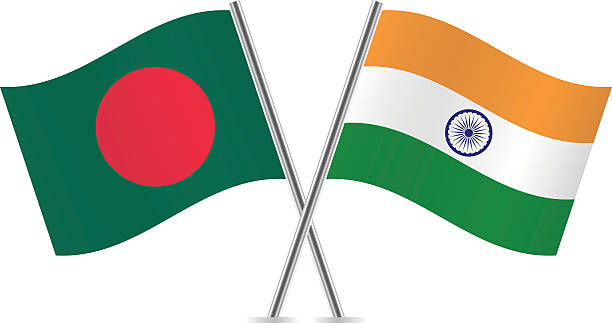
India's ties with Bangladesh are passing through a critical phase.
Amidst reports of violence and chaos in Bangladesh, India's ties with the neighbouring country are passing through a critical phase. India-Bangladesh relations infact face one of their most serious challenges since 1971, the year Bangladesh became an independent nation with India’s support. Bangladesh is reportedly being viewed in New Delhi today as one of its most complex strategic challenges. The strain in ties, ongoing since August 2024, when ousted Prime Minister Sheikh Hasina fled to Delhi, has intensified sharply in recent days. This has reportedly raised serious concerns within India’s policy and security establishment.
The fall of Sheikh Hasina’s government in August 2024 proved to be a turning point in the bilateral relations between the two countries. Since then, Bangladesh has struggled to regain political stability. Violence has resurfaced across major cities, triggered most recently by the killing of student leader Sharif Osman Hadi, who had reportedly played a role in the unrest that led to the government’s collapse. Protests, arson, and mob violence followed, creating an atmosphere of fear and lawlessness. The interim administration under Muhammad Yunus has so far failed to restore order, raising questions about its control over the situation.
One of the most alarming developments has been the growing influence of extremist groups. Anti-India sentiment has become a central political tool, with India repeatedly being blamed for internal developments in Bangladesh. This narrative has been amplified without credible investigation and has spilled over into attacks on Indian diplomatic interests and public hostility towards India.
Minorities, especially Hindus, have borne the brunt of this instability. Over the past 16 months, there have been repeated incidents of violence targeting Hindu individuals, homes, and places of worship. The lynching of Hindu labourer Dipu Chandra Das in Mymensingh symbolised the brutality of the current phase, drawing outrage in India and abroad. While arrests were made, the incident exposed the deep sense of insecurity among minorities. Hindus made up around 15-16 percent of Bangladesh’s population in the 1970s. However, today, their share has fallen to less than 8 percent, reflecting decades of persecution and migration that continue even now.
Diplomatic tensions have further escalated following protests in New Delhi over minority killings in Bangladesh. According to reports, anti-India slogans are being seen on the streets of Bangladesh, and protests are taking place in front of diplomatic compounds. Strategically, India is also concerned about the growing presence of external actors in Bangladesh. A standing committee in the Parliament has warned that the combination of extremist resurgence, weakened democratic institutions, and foreign interference may pose long-term security risks for India’s eastern borders.
With elections expected in early 2026, uncertainty looms large. The Awami League has been barred, opposition forces are fragmented, and extremist groups see an opportunity to consolidate power amid chaos. Economic conditions are deteriorating, and law and order remains fragile.
For India, the challenge is to respond firmly yet cautiously, avoiding actions that may further inflame tensions. For Bangladesh, the stakes are even higher. Continued instability risks pushing the country deeper into democratic decline, economic hardship, and regional isolation.